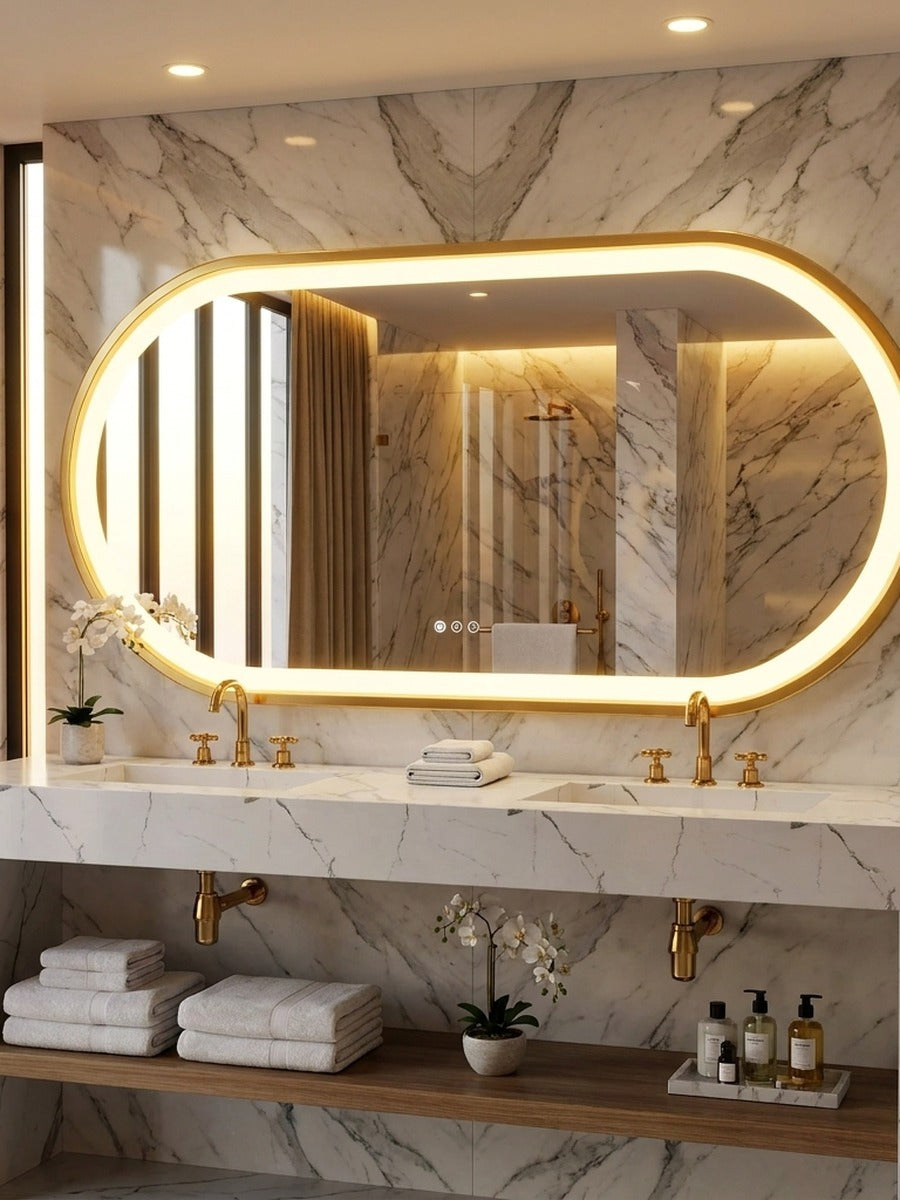
LED mirror prices span an enormous range — from $80 on Amazon to $1,200+ from designer brands. The difference isn't always what you'd expect. Here's an honest breakdown of what you're actually buying at each price point.
Under $150: The DIY tier
At this price point, you're getting basic LED backlighting — typically a single-color temperature, no dimming, and minimal build quality. These mirrors work, but the electronics often fail within 2 years, and there's no meaningful warranty support. Fine for a rental or temporary space.
$150–$300: The functional tier
This is where most of the market volume is — and where the quality variance is widest. You'll find mirrors with dimmable lighting, color temperature adjustment, and anti-fog at this price. The key variables: build quality, packaging (critical for a fragile product), and post-sale support.
This is also the tier with the highest concentration of problematic brands — importers with no real support infrastructure who compete on price and hope you don't have a problem.
$300–$600: The quality tier
At $300+, you should expect: robust electronics with a meaningful warranty (3–5 years), quality glass with polished edges, reliable anti-fog, and a brand with real customer service. This is the price point where paying more reliably translates to getting more.
$600+: The premium/custom tier
Custom sizing, designer frames, smart home integration, and premium finishes. For most buyers, this is more than necessary — but for a custom renovation or a specific design aesthetic, it may be worth it.
The real value question
A $400 mirror that lasts 10 years costs $40/year. A $200 mirror that fails in 2 years and is unreplaceable under warranty costs $100/year. The cheapest option is rarely the most economical one.
Lumeor mirrors are positioned in the $300–$600 quality tier — with a 5-year warranty, 60-day returns, and ETL certification included at every price point.